Stash as Mor
Learn what it means for Stash to act as the Merchant of Record (MoR) and how this role removes financial, operational, tax, and compliance responsibilities from game studios.
What “Merchant of Record” means
A Merchant of Record (MoR) is the entity that is legally responsible for a transaction.
In the context of Stash, this means Stash is the party that sells the product to the player and assumes responsibility for the full purchase lifecycle.
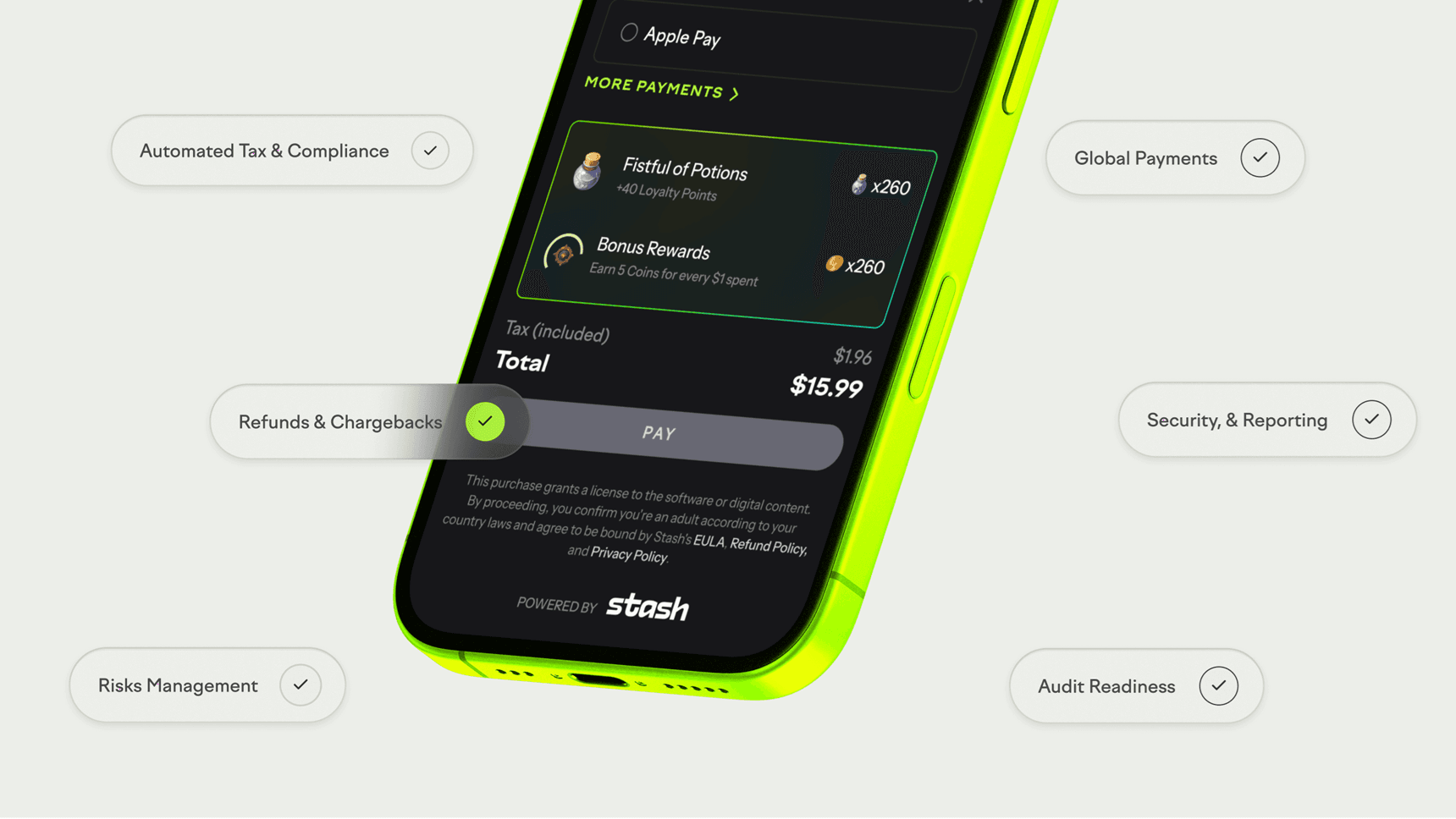
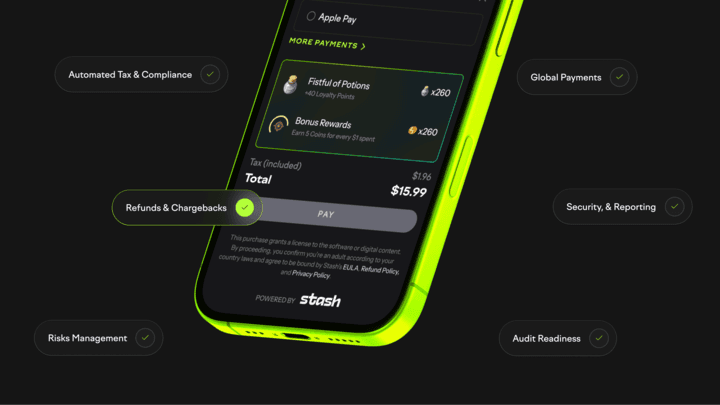
One way to think about this is the retailer analogy:
- The game is the product
- Stash acts as the retailer selling that product to the customer
- The player purchases from Stash, not directly from the developer
As MoR, Stash is responsible for everything related to the purchase itself, while the developer remains responsible for the game and its functionality.
This role is different from a Payment Service Provider (PSP).
A PSP focuses on processing payments, while a Merchant of Record takes on legal, financial, tax, and compliance responsibilities associated with selling to customers.
What Stash handles on your behalf
When Stash acts as the Merchant of Record, it takes responsibility for all purchase-related activities, including:
- Payment processing, from the moment a customer enters the web shop to the moment they receive a receipt
- Refund handling, including proactive refunds in clear fraud scenarios
- Disputes and chargebacks, including communication with banks and evidence submission
- Fraud detection and prevention
- Tax calculation, collection, filing, and remittance across applicable jurisdictions
- Audit exposure and tax risk, including handling audits related to transactions
- Compliance and regulatory responsibilities associated with global payments
These responsibilities are handled by Stash so that partners do not need to build, operate, or maintain these systems themselves.
What you (the Partner) remain responsible for
While Stash manages the purchase lifecycle, certain responsibilities remain with the game studio:
- Game delivery, including items, entitlements, and in-game content
- Bug resolution and technical issues related to the game
- Customer support for gameplay-related issues, such as bugs or in-game behavior
This separation ensures clear ownership between commercial responsibilities (handled by Stash) and product responsibilities (handled by the developer).
Why the Merchant of Record Model Matters for Game Studios
Using a Merchant of Record model removes a significant operational and regulatory burden from game studios.
Key benefits include:
- Operational relief, as studios do not need to manage payments, refunds, disputes, or chargebacks
- Reduced legal and tax risk, since Stash assumes responsibility for tax compliance and related audits
- Global expansion without tax registration, avoiding the need to register, calculate, and maintain tax rates in multiple jurisdictions
- Optimized checkout and authorization performance, supported by Stash’s technology and in-house expertise
- Clear and predictable financial processes, with transactions, refunds, and disputes reflected in standard financial reporting
High-level purchase flow
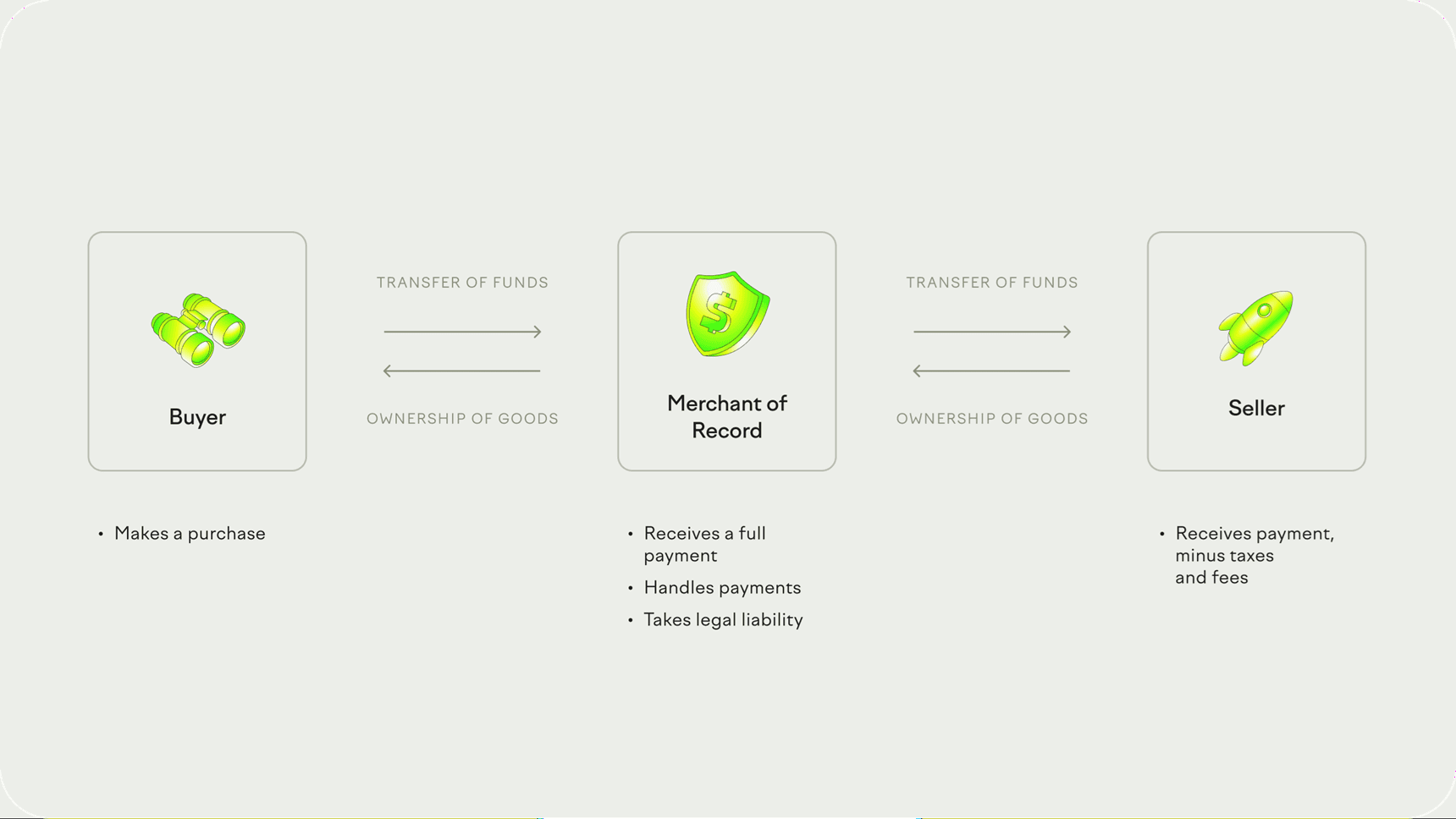
At a high level, the purchase flow under the Merchant of Record model works as follows:
- A customer enters the Stash web shop
- The customer completes a purchase with Stash
- Stash processes the payment and collects the funds
- Applicable taxes are handled by Stash
- The partner receives their share of the proceeds
This end-to-end flow represents the Merchant of Record experience, from the customer entering the store to leaving with a receipt.
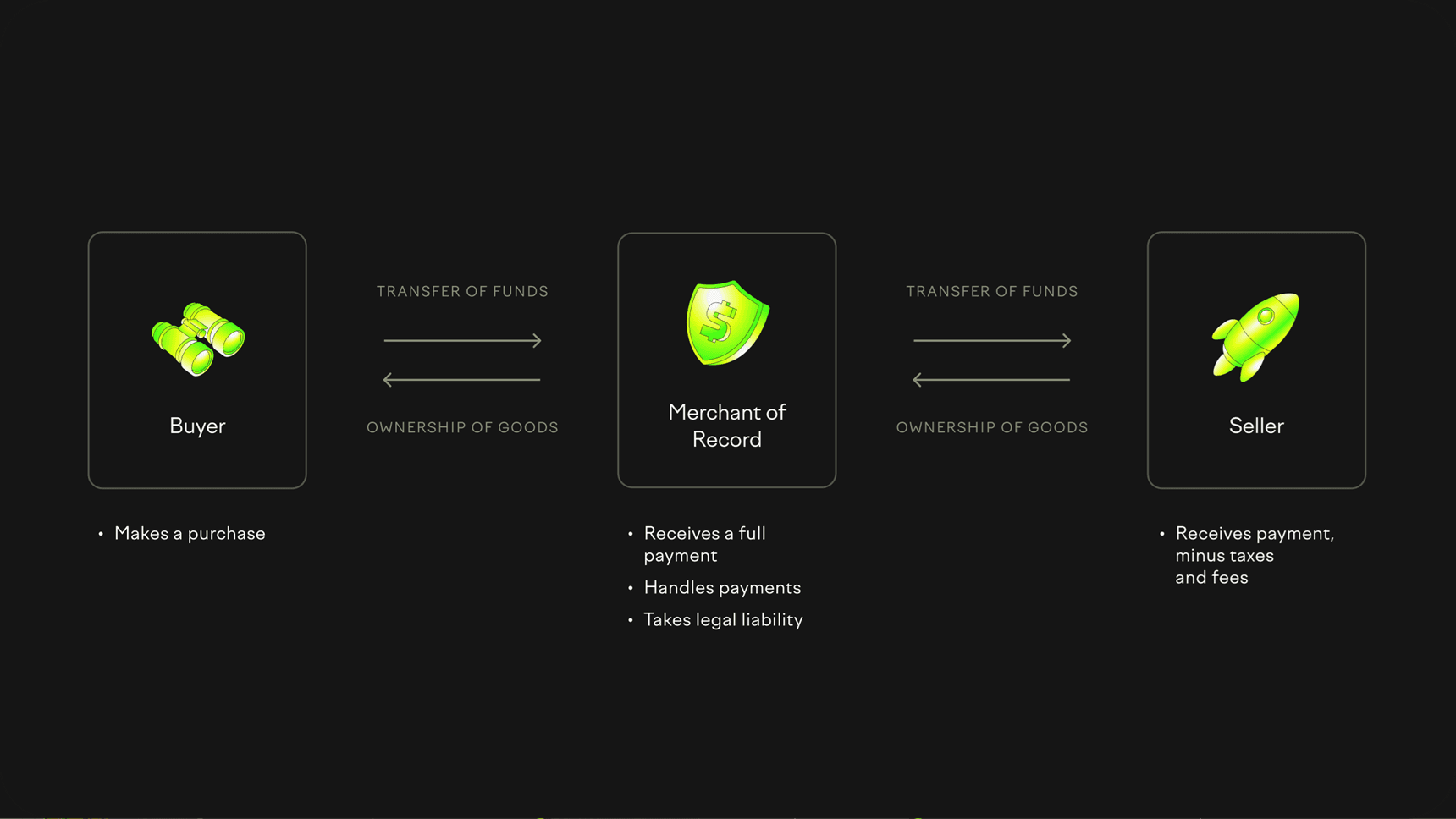
A simplified, non-technical diagram is used to illustrate this flow for clarity.
How is this guide?
Supported Payment Methods
How Stash surfaces the most relevant, highest-converting payment methods in every market, plus the full country-by-country coverage list.
Refunds, disputes and chargebacks
Learn what it means for Stash to act as the Merchant of Record (MoR) and how this role removes financial, operational, tax, and compliance responsibilities from game studios.